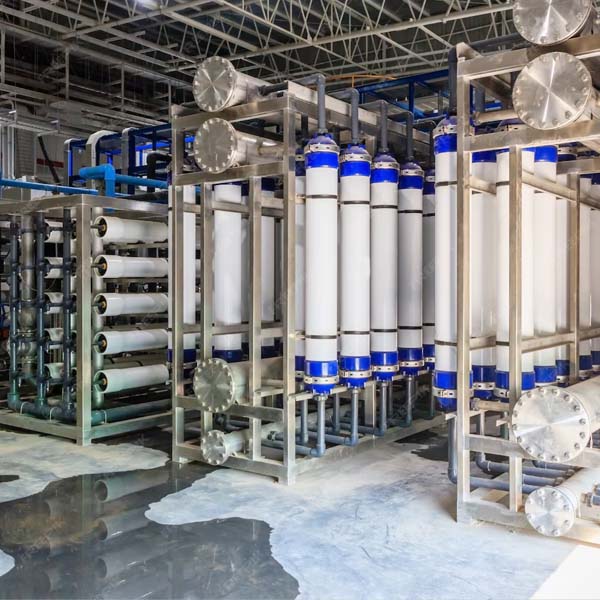
Many water treatment plants use a combination of coagulation, sedimentation, filtration and disinfection to provide clean, safe drinking water to the public. Worldwide, a combination of coagulation, sedimentation and filtration is the most widely applied water treatment technology.
The coagulation process involves adding iron or aluminum salts, such as aluminum sulphate, ferric sulphate, ferric chloride or polymers, to the water. These chemicals are called coagulants, and have a positive charge. The positive charge of the coagulant neutralizes the negative charge of dissolved and suspended particles in the water. When this reaction occurs, the particles bind together, or coagulate (this process is sometimes also called flocculation). The larger particles, or floc, are heavy and quickly settle to the bottom of the water supply. This settling process is called sedimentation. The following diagram illustrates the basic reactions and processes that occur during coagulation.